
Same Workstation Terminal, Different Workshop: What Changes
The difference between industries is not whether to scan, but the code surface, environment, cycle time and cleaning method. The same 8 inch model needs washdown protection in a food plant, ESD protection in an electronics plant, and oil and heat resistance in an injection molding shop. The differences for eight workshop types are listed below; the rest is confirmed per project.
Where the Problems Are
- Different code surfaces: paper labels, laminated labels, metal DPM, screen codes - reading parameters and lighting differ
- Environmental effects: oil, dust, washdown and static decide the protection and mounting position
- Different cycle times: high-frequency small-part scans and low-frequency full-carton scans place different demands on exposure and triggering
- Different systems: auto parts need IATF traceability, food needs batch numbers and shelf life, medical needs unique identification
How to Implement
- Start with industry and operation: state the workshop environment, cleaning method and code surface, and the configuration is mostly settled
- Then protection: standard models for ordinary workshops; add protective covers or relocate in washdown, oily or dusty environments
- Then ports: which port each instrument, scale, printer and PLC uses, and whether extra serial or LAN ports are needed
- Finally a small trial install: industry differences are large, so run one unit for a week before replicating across the line
Configuration Comparison
| Industry | Typical Workstations | Key Concerns |
|---|---|---|
| Electronics / 3C | Through-hole insertion, assembly, functional testing, packaging | ESD protection, high-frequency small-part scanning, clean benches |
| Automotive Parts | Assembly, torque, inspection, traceability marking | IATF traceability, cycle time, metal-marked 2D codes (DPM) |
| Food / Beverage | Batching, packaging, inkjet code verification, warehousing | Washdown, stainless steel benches, batch number and shelf life checks |
| Pharma / Medical Devices | Packaging, inspection, UDI coding | Clean zones, UDI unique identification, record retention |
| Solar / New Energy | Stringer, lamination, module testing | High temperature, long operations, linking barcodes to module numbers |
| Injection Molding / Hardware | Part removal at the machine, deburring, bagging | Oil, dust, vibration; mounting must be solid |
| Garments / Footwear and Headwear | Cutting, sewing, pressing, packing | Hangtags and care labels, piece-rate reporting across operations |
| Warehousing and Logistics | Receiving, sorting, verification, truck loading | Scan large carton codes, standing operation, wireless or POE |
Workstation Photos


FAQ
The food plant is washed down daily; can the workstation terminal handle it?
Standard models have a flat front panel that tolerates daily wiping and splash, but direct high-pressure spray is not recommended. In washdown workshops, add a protective cover, mount outside the wash zone, or evaluate a higher ingress protection option per project.
The metal parts carry DPM codes; can they be read?
Choose the light source and lens by code surface: low contrast is common with laser marking on metal, so test with real samples and, if needed, use a dedicated reading module - do not order based on paper code experience.
The electronics plant requires ESD protection; does the device have it?
Housing structure and grounding follow standard industrial practice; whether it meets your ESD requirements must be confirmed against workshop rules (grounding resistance, bench material, ionizers, etc.). We provide the port and grounding details for your ESD owner to review.
With multiple industries on one line, can models be standardized?
Standardize on the same size and platform where possible and differentiate by bracket, protective cover and preinstalled apps; spares and images then stay one set, costing less to maintain than a different model per industry.
Models Commonly Used in This Scenario
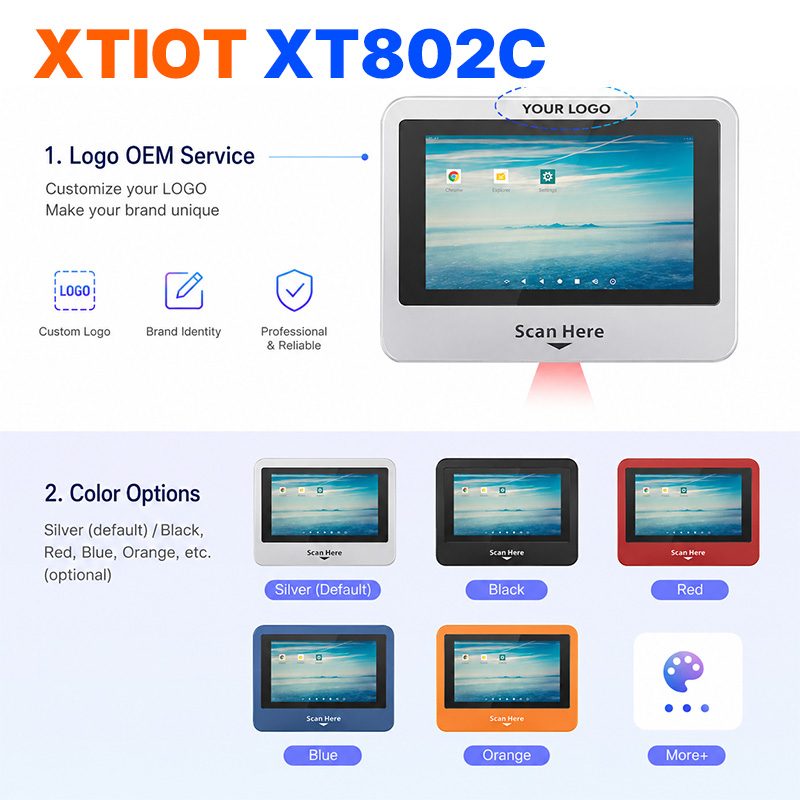
XT802C
XT802C is a 5 inch Android 11 industrial panel PC with 720×1280 portrait display, housing 148×110×40mm, weight 500g.
See specs and selection →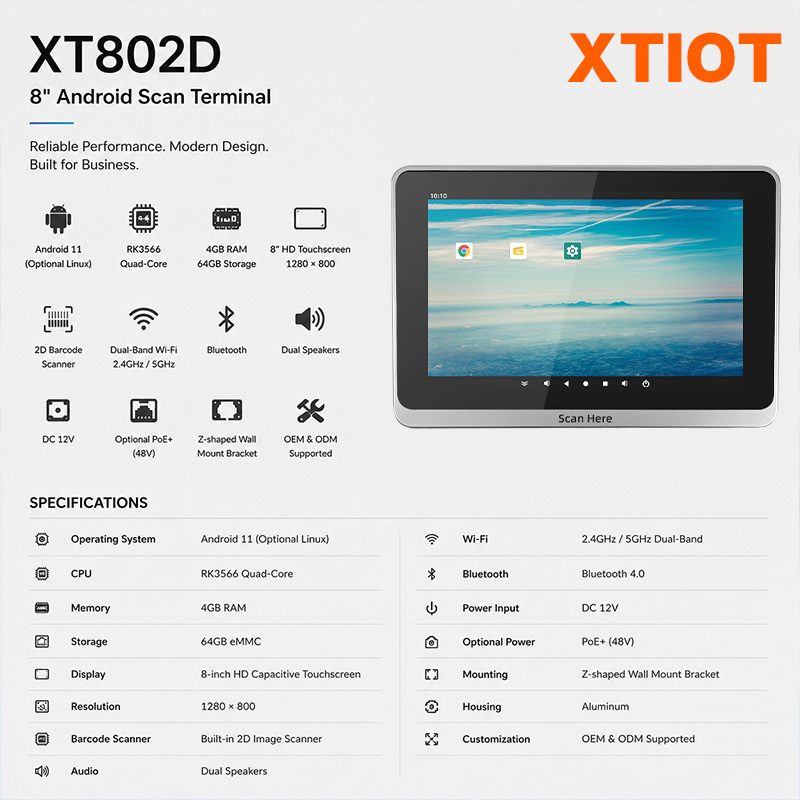
XT802D
XT802D is an 8 inch Android 11 industrial panel PC with 800×1280 portrait display, housing 212×143×37mm, weight 732g.
See specs and selection →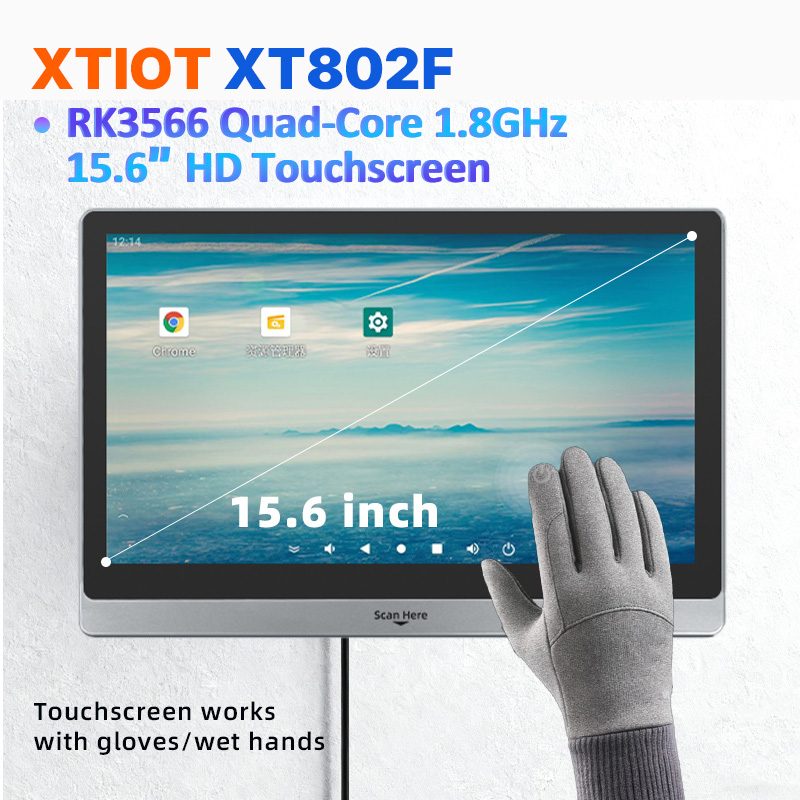
XT802F
XT802F is a 15.6 inch Android 11 industrial panel PC with 1366×768 landscape display, housing 382×261×35mm, weight 2.38kg.
See specs and selection →Describe your workstation and we will provide a configuration you can install directly
Describe the process, cycle time, scanning distance and software environment (MES / ERP / in-house), and we will provide a model, bracket and port proposal within 24 hours.