
Traceability is not an after-the-fact check; it stops errors at the workstation
Traceability usually fails not because the system cannot store data but because nobody stops the error when it happens. The workstation verifies on scan: whether this box belongs to this pallet, whether this code has been scanned, whether this operation was skipped. The screen gives the answer on the spot, so defective goods do not reach the next station.
Where the Problems Are
- Multi-level linking: item code, box code, carton code and pallet code bound level by level at scan, stored locally and uploaded
- Missed and duplicate codes flagged at once: a second scan of the same code raises a red frame immediately, not at dispatch
- Skipped-operation prevention: check the previous station's record against the routing, and do not release an operation that was not performed
- Evidence for exceptions: a failed code can be photographed and the operator logged, which helps root-cause analysis
How to Implement
- Map the hierarchy before selecting hardware: which codes exist at item, box, carton and pallet level, and which operation generates each
- Place the checks: put mandatory verification at the workstation, not all at the dispatch door
- Choose the reading method: built-in engine for paper labels, external fixed reader for pallet sides or longer distances
- Run a batch of real data: test with wrinkled, laminated and soiled labels, not just codes straight off the printer
Configuration Comparison
| Traceability actions | Workstation configuration | Notes |
|---|---|---|
| Item scan plus box code binding | XT802D plus built-in engine | Two codes per scan, hierarchy confirmed on screen |
| Carton label printing plus label verification | XTCM320 (built-in 80mm printer) | Carton label printed after scan verification |
| Multi-code pallet reading | XT802F + external fixed code reader | Whole pallet read in one pass, result sent back to the workstation screen |
| Skipped-operation prevention | XT802C plus workstation code | Scan the workstation code to open that station's operation; an unfinished step is not released |
Workstation Photos


FAQ
We use 1D and 2D codes together. Can they be handled together?
Yes. The engine reads common 1D and 2D symbologies, and the application routes them by symbology or prefix. If a label carries both, you can accept one type to avoid misreads.
The label is wrinkled or laminated and will not read. What can we do?
Start with flatness: hold the label down with a pressure plate or air jet, then adjust exposure to reduce motion blur, and finally set the reading angle close to perpendicular. If it still will not read, an external fixed reader with multi-angle lighting helps more than a different screen.
Can the terminal connect directly to a scale or weighing module?
Yes. Connect the indicator over RS232 (RJ11 to DB9) or USB and the application submits weight together with the code. For several serial devices at once, use a USB-to-serial hub and check its power budget.
Can checks still run when the network is down?
Recent hierarchy data and scan records can be cached locally for basic checks such as duplicate codes and skipped operations. Checks across shifts or workstations need the network, and the scope document states what works offline.
Models Commonly Used in This Scenario
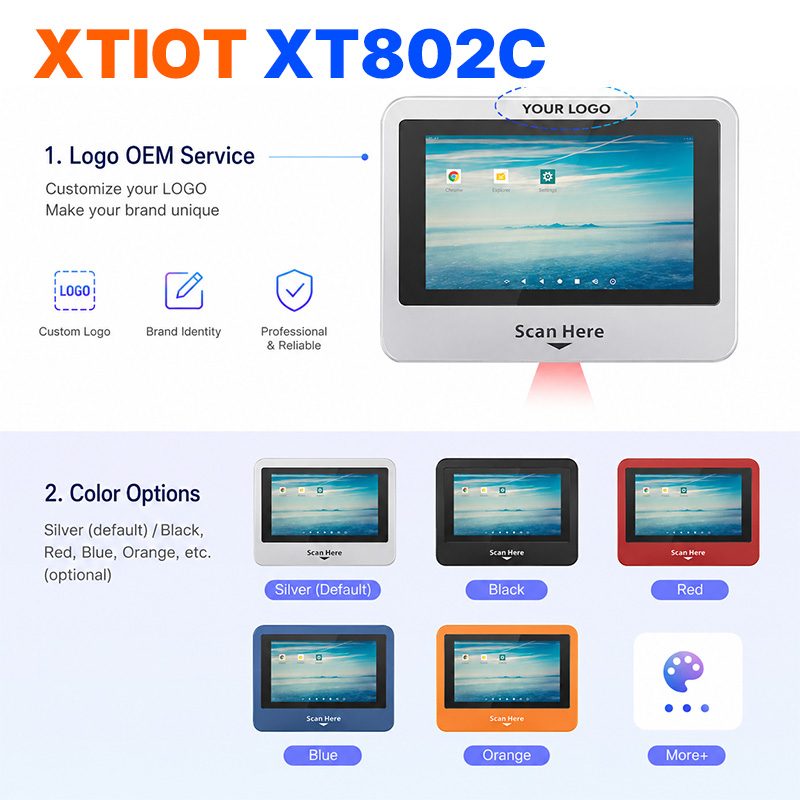
XT802C
XT802C is a 5 inch Android 11 industrial panel PC with 720×1280 portrait display, housing 148×110×40mm, weight 500g.
See specs and selection →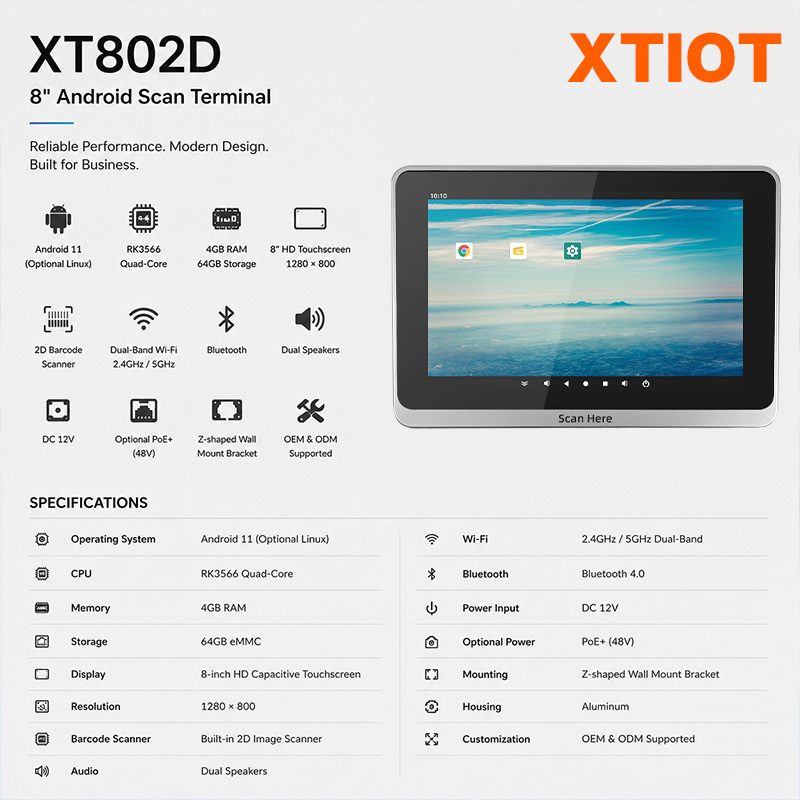
XT802D
XT802D is an 8 inch Android 11 industrial panel PC with 800×1280 portrait display, housing 212×143×37mm, weight 732g.
See specs and selection →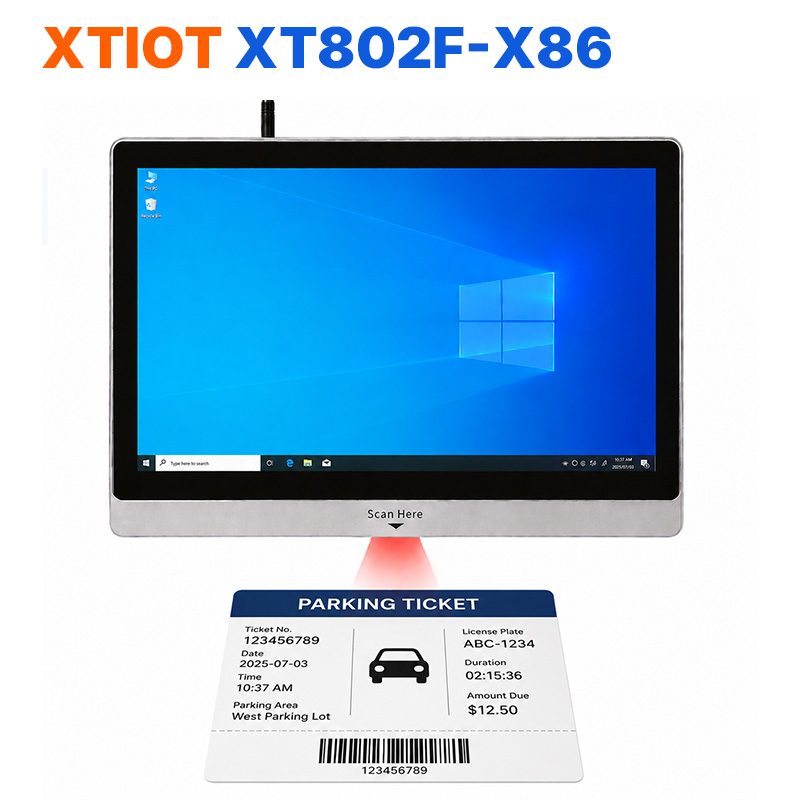
XT802F-X86
XT802F-X86 is a 15.6 inch Windows 10 industrial panel PC with 1366×768, Intel J1900 and 4G + 64G.
See specs and selection →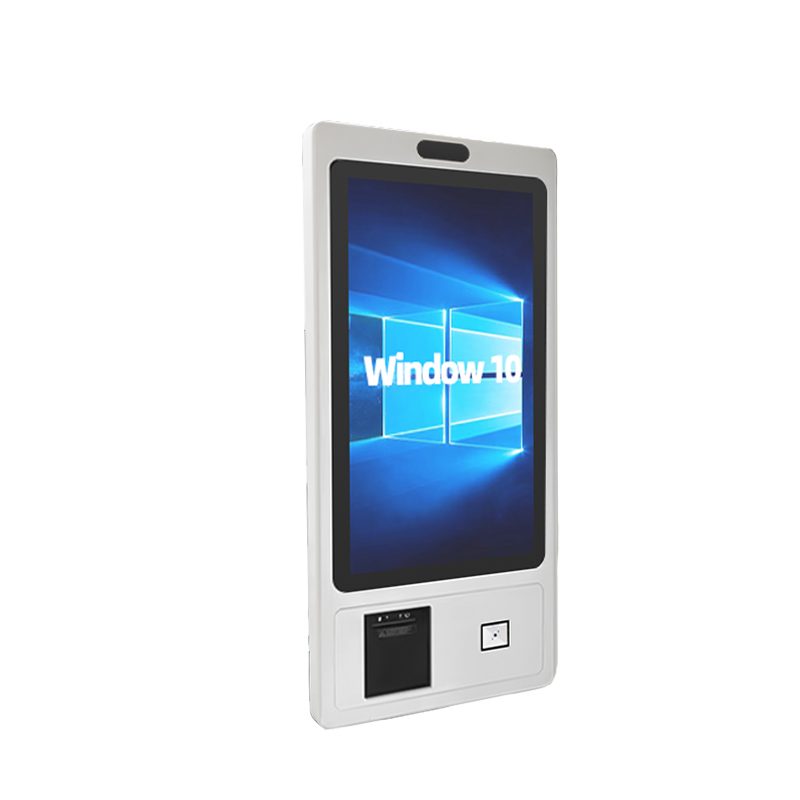
XTCM320
XTCM320 is a 32 inch Windows portrait all-in-one with 1080×1920, i5-3320M and 4G + 128G SSD,
See specs and selection →Describe your workstation and we will provide a configuration you can install directly
Describe the process, cycle time, scanning distance and software environment (MES / ERP / in-house), and we will provide a model, bracket and port proposal within 24 hours.